
OperationJan 23, 2025
Tips for Using Asana to Manage Agile and Scrum Projects Effectively
Today, Agile is not only a software development methodology but has become a popular way of working …
In the context of an increasingly changing business market and fierce competition, the introduction of the Agile model has become a breakthrough in project management. Agile not only helps businesses optimize performance, but it also offers superior flexibility compared to the traditional Waterfall model. This approach allows software development projects to easily adapt to continuous changes from customers, while minimizing wasted resources. To understand more deeply about the Agile model, let'
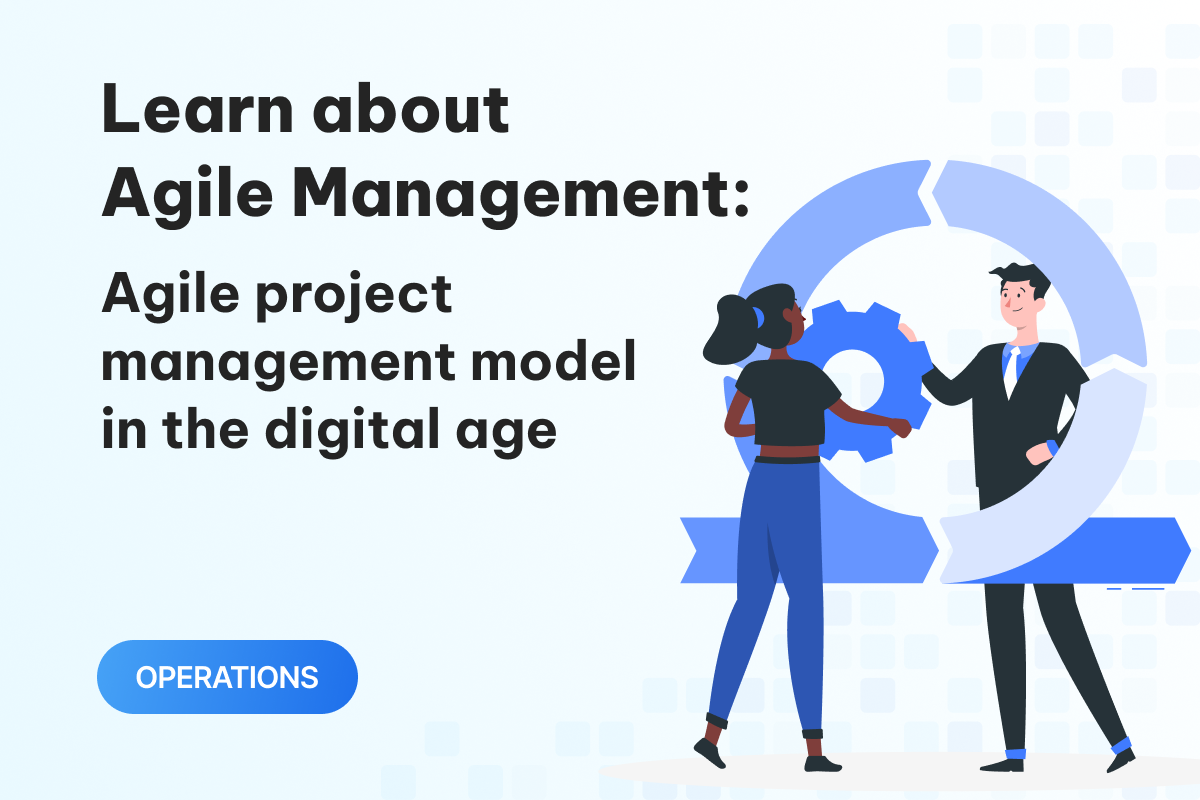
The Agile model is a flexible, iterative software development management method based on the repetitive cycle of tasks to optimize time and enhance coordination among team members. This method focuses on breaking down the project into short loops, usually lasting 1 to 2 weeks, to quickly create small but complete versions of the product.

What is the Agile Model?
With Agile, cross-functional teams work together from the planning stage to completion, making it easier for the project to adapt to changes, mitigate risks, and respond more flexibly to challenges from the market. At the same time, the phases of the project are conducted in parallel, ensuring that every part of the project is closely monitored.
The outstanding advantage of Agile is that it significantly reduces product turnaround time, while promoting close collaboration and effective communication between departments. Two typical models of Agile that are widely used are Scrum and Kanban.
The Agile model brings many practical benefits to organizations, namely:
The Agile method helps shorten the development cycle, delivering products to users quickly and efficiently. Here are the steps to implement the project according to the Agile model:
Before starting, businesses need to clearly define the end goal of the project and make a detailed plan to achieve that goal. Agile allows tasks to be flexibly adjusted to respond to the changing needs of customers in a timely manner.
The product roadmap defines the stages that need to be completed to create the final product. In this step, businesses need to make a specific and detailed roadmap, ensuring that each stage is towards the final goal.
Before implementing the project, businesses need to develop a plan to release product features. This makes it possible for stakeholders to track and evaluate each release, ensuring that each feature is implemented as planned.

Steps to implement the Agile methodology
Each sprint is a short work cycle in which the business will identify tasks to be completed and assign specific tasks to each member. This helps ensure the quality of work and customer satisfaction.
Briefings take place every day for members to report on progress, problems encountered and discuss solutions. These meetings help maintain continuity and ensure project progress.
After each sprint, the implementation team will hold two meetings: a meeting with stakeholders to evaluate the finished product, and an internal meeting to discuss emerging issues and improvement solutions for the next sprint.

Pros and Cons of the Agile Model
Here are some common Agile methodologies that many businesses are adopting today. Statistics show that Scrum is the most popular model, besides, many companies also combine different methods to optimize workflows.

Popular Agile Methodologies
Scrum is one of the most popular Agile methods, helping businesses optimize workflows according to a loop mechanism and add product value. This approach focuses on development phases called sprints, in which the team can quickly achieve product goals. The three core principles of Scrum include Transparency, Testing, and Adaptation, which improve teamwork efficiency.
Kanban originated in Japan, first developed at Toyota. This method uses a visual table divided into columns to track workflows, from "To-do" to "Done." Kanban requires transparent communication between members, helping everyone understand the development status of the project.
Lean is a lean philosophical management method, originating from the manufacturing sector and widely applied in many other industries. Lean focuses on enhancing value and minimizing waste. The five key principles of Lean include: Process-Focused, Maximize Value and Minimize Waste, Standardize Work, Create Flow, and Solve Problems Quickly.
Extreme Programming (XP) is a framework based on the Agile methodology, suitable for many different business sizes. XP focuses on providing value to customers and is willing to accept changes in product requirements. This method emphasizes the role of teamwork, where all members work together to solve problems.
Crystal is the most flexible framework in Agile, allowing teams the freedom to develop products. This method focuses on interpersonal interaction rather than process. Crystal emphasizes principles such as people, interaction, skills, and hospitality, with many variations suitable for different group sizes, from Crystal Clear for small groups to Crystal Red for large groups.
When applying the Agile model in project management and implementation, businesses have significantly optimized time and resources, and improved efficiency in detecting and handling arising problems. Agile really brings a step forward in shortening the development cycle and responding quickly to market demand.
However, applying Agile is not just a simple implementation decision but requires flexibility and determination from business leaders. The transition to Agile is also a major change in culture and HR development strategy, requiring the understanding and consensus of the whole organization for Agile to reach its full potential.
Today, Agile is not only a software development methodology but has become a popular way of working …
Content creators often share a common question: How can we effectively manage our content calendar a…
Zoho CRM Plus is a comprehensive solution featuring 8 powerful apps designed to optimize business pe…
We see AI as an investment — not a cost — for optimizing operations, marketing, sales, and customer support. But the right investment needs a roadmap, not trend-chasing. First 30-minute call is on us. No sales pitch. Just two founders talking about your business.