

OperationJan 23, 2025
Tips for Using Asana to Manage Agile and Scrum Projects Effectively
Today, Agile is not only a software development methodology but has become a popular way of working …
In today's context, the efficient organization of information and resource management has become essential for businesses to maintain their competitive advantage. The Just in Time (JIT) method has emerged as an advanced production management strategy that helps optimize production processes and supply chains. In this article, BENOCODE will help you gain a clearer understanding of what Just in Time is, as well as the benefits and necessary conditions for effectively implementing the JIT model in
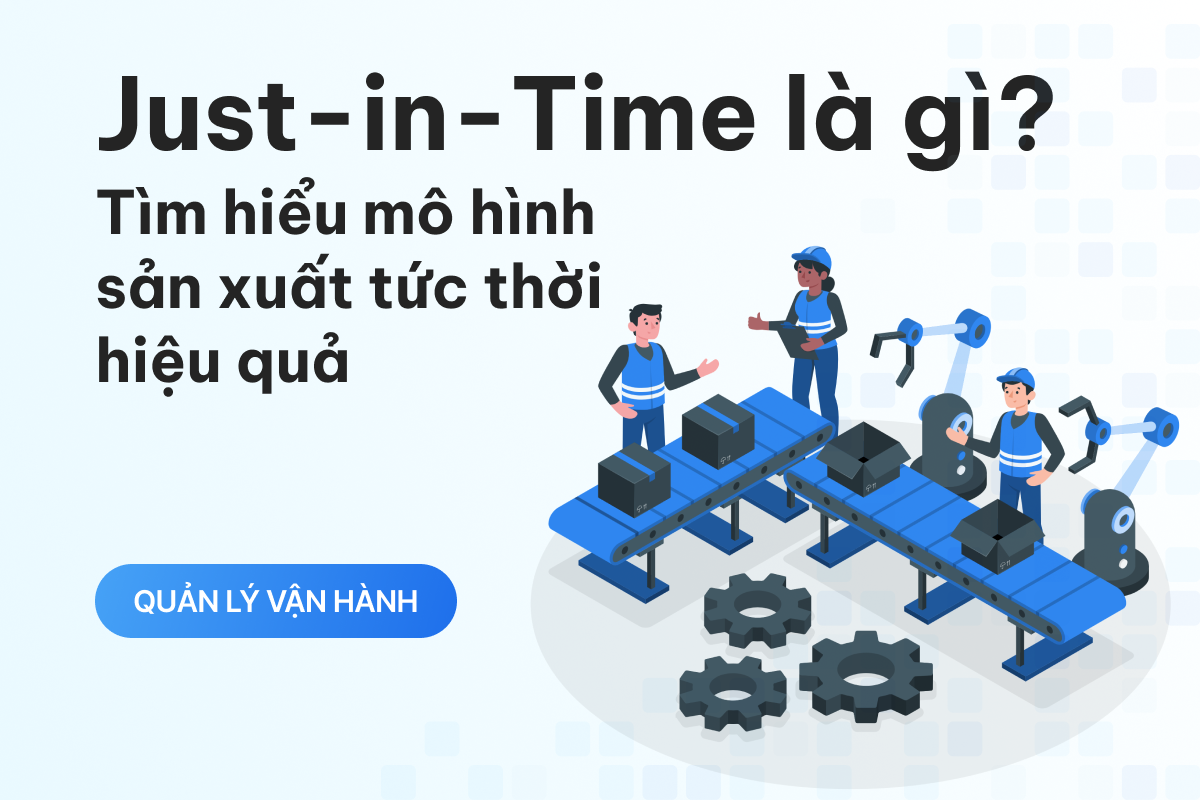
Just-in-Time (JIT) is a production management method that optimizes the supply and production process by producing the right product, the right quantity, and the right time. JIT helps businesses maintain minimal inventory, minimize waste, and maximize operational efficiency.
JIT systems require the flow of raw materials, products, and goods in the production and distribution process to be planned in detail, so that each stage can start as soon as the previous stage is completed. This helps to minimize waiting time and ensure that the production stages run smoothly, avoiding waste.

What is Just in time (JIT)?
In addition to volatile markets such as economic crises, rising production costs, and changing consumer demand, the JIT model is increasingly proving to be important, helping businesses improve their competitiveness, mitigate risks, and respond quickly to market demand.
The main goal of Just-in-Time (JIT) is balance in the production system, ensuring a continuous and stable production process without interruption.
To achieve this balance, JIT focuses on shortening implementation time and optimizing resource usage, specifically through three main objectives:

What are the goals and benefits of Just in time?
Therefore, when Just-in-Time (JIT) is implemented effectively, businesses and manufacturers will gain many great benefits for businesses, including:
In order for Just-in-Time (JIT) to be implemented effectively, businesses need to meet certain conditions:
To successfully implement Just-in-Time (JIT) and meet flexible market demands, businesses can apply the following:
In the Just-in-Time model, materials are only put into stock when they are needed for production, avoiding long inventories. To implement JIT effectively, businesses often sign long-term contracts with reliable suppliers to ensure stable quality of goods, instead of only focusing on the cheapest price.
JIT is a part of the lean management process where all departments, including human resources, work together and depend on each other to achieve optimal results. Stemming from Japan's Kaizen philosophy, JIT promotes continuous improvement in production and involvement from the entire workforce, from assembly workers to senior leadership. The main goal is to reduce waste and improve product quality.

How the Just-in-Time model works
Steps of the Just-in-Time model:
Consider key factors such as product design, production processes, human resources, and production plans. The aim is to optimize the system by eliminating interruptions, reducing waste, and creating a flexible system.
In order to achieve continuous improvement, enterprises apply management measures such as clearly delineating employee roles, quality control according to statistics, stable production schedules, and evaluating production capabilities.
Train employees on the Kanban method to produce and withdraw supplies according to actual needs. Adjust the batch size to optimize the process.
For JIT to be successful, it is necessary to establish a close relationship with the supplier. Select and cooperate with priority suppliers, negotiate delivery time and quality requirements, as well as establish sourcing evaluation indicators.
Identify inventory needs and related policies, and minimize unnecessary material movements.
Train your employees with the skills they need and empower them to do their best work.
Reduce the number of parts and steps in the production process by optimized, standardized, and revisited the entire process.
Identify KPIs, apply quality measures, and analyze the root causes of problems. Focus on continuous improvement and trend tracking to enhance the performance of each aspect in Just-in-Time.
Thus, through the article BENOCODE shared, hopefully you have a better view of Just-in-Time (JIT) and the benefits that this production model brings to businesses. JIT is not only an advanced manufacturing strategy that helps minimize costs and optimize productivity, but also supports businesses to improve service quality and better meet customer needs. Successful application of JIT requires an understanding of the necessary principles and conditions, thereby helping businesses achieve competitive advantages and sustainable development in the market.
Today, Agile is not only a software development methodology but has become a popular way of working …
Content creators often share a common question: How can we effectively manage our content calendar a…

Zoho CRM Plus is a comprehensive solution featuring 8 powerful apps designed to optimize business pe…
We see AI as an investment — not a cost — for optimizing operations, marketing, sales, and customer support. But the right investment needs a roadmap, not trend-chasing. First 30-minute call is on us. No sales pitch. Just two founders talking about your business.